
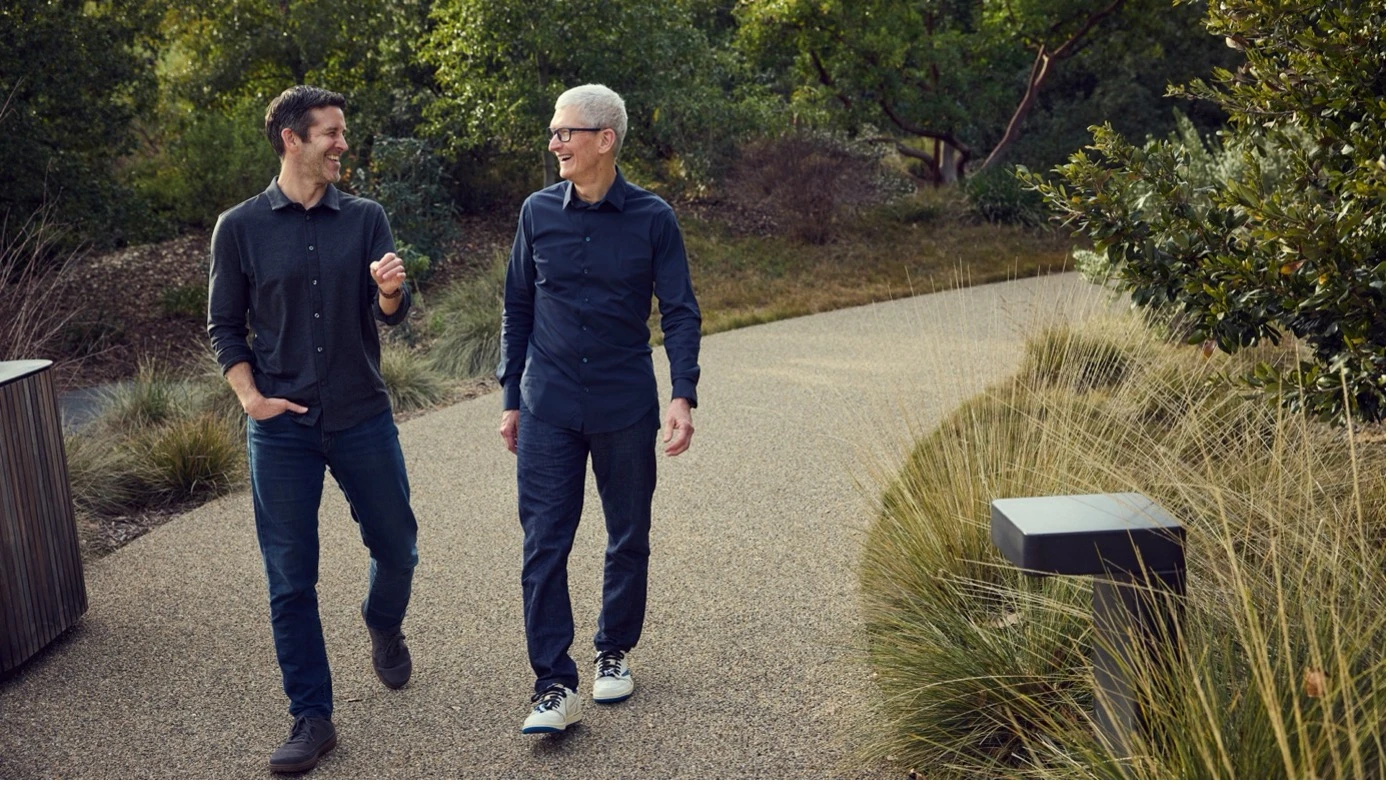
A fifteen-year chapter is closing at Apple. The company has announced that as of 1 September, Tim Cook will step down as CEO and be succeeded by John Ternus, the senior executive responsible for hardware engineering. Rather than leaving altogether, Cook will stay on as executive chairman and keep his influence at Apple.
The Legacy of the Cook Era
The change marks the end of an era that began with Cook's appointment as CEO in 2011 and shaped the post-Steve Jobs period. Under Cook's leadership, Apple's market value grew roughly 24-fold to reach 4 trillion dollars.
Over that time the company did more than grow iPhone revenue — it widened its portfolio:
- • Apple Watch
- • AirPods
- • Vision Pro
John Ternus: The Architect of the Hardware
The new CEO, John Ternus, has long been seen inside Apple as the strongest candidate to succeed Cook. Joining the company in 2001, Ternus led the hardware teams behind Apple's most critical products:
- • iPhone
- • iPad
- • Mac (particularly the Apple Silicon transition)
- • Apple Watch
- • AirPods
Becoming the company's eighth CEO on 1 September, Ternus will also join the board.
The Challenges Ahead
The picture Ternus inherits, though, is far more complicated than the Apple Cook took over in 2011:
Operational challenges:
- • Global supply chain problems
- • US-China geopolitical tensions
- • Rising chip costs
- • Tariffs
Strategic issues:
- • Falling behind competitors in the AI race
- • Delayed Siri updates
- • Slow progress in generative AI
- • Growing investor pressure
Apple in the Age of AI
The biggest question of Apple's new era will be whether Ternus can reposition the company not only in hardware but in the age of artificial intelligence.
Apple remains one of the most valuable technology companies in the world, but the expectation is no longer simply to produce another iPhone — it is to define the next generation of AI experience. How Ternus manages that transformation will be among the most closely watched stories in the sector.